The world as thou:

A Network of Encounters

by Saul Appelbaum

Saul Appelbaum, Film Still, The Pioneers: The Film, Act 1, Ephemera, Episode 1, Medium: In Medias Res, Kissing the Muse, featuring Janina Picard, 2026

For Ahmedabad Cultural Week 2026, a series of interconnected works unfolds across publishing, film, exhibition, and the physical gathering in Ahmedabad. Rather than treating these as separate projects, we are approaching them as nodes within a single network, each entering the question of our relationship to one another and to the worlds we inhabit from a different direction.

In The World as Thou, published by The Pioneers, my conversation with curator David Evans Frantz begins with A Queer Arcana: Art, Magic, and Spirit at the Palm Springs Art Museum and moves through abstraction, spirituality, sexuality, landscape, community, and Martin Buber’s distinction between I–It and I–Thou. In Kissing the Muse, published by Curator, Janina Picard approaches a related question from inside the creative act, considering love, attention, surrender, nature, and the possibility of encountering something without immediately asking what it can produce.


These lines meet in a short film screening at Ahmedabad Cultural Week and continue through Agile Cinema®, where the larger film develops across three acts, eleven episodes, and thirty-three scenes. Rather than arriving as fixed works, the episodes continue to be modified, expanded, and reassembled as new encounters, conversations, images, places, and experiences enter the process.

For Ahmedabad Cultural Week 2026, a series of interconnected works unfolds across publishing, film, exhibition, and the physical gathering in Ahmedabad. Rather than treating these as separate projects, we are approaching them as nodes within a single network, each entering the question of our relationship to one another and to the worlds we inhabit from a different direction.

In The World as Thou, published by The Pioneers, my conversation with curator David Evans Frantz begins with A Queer Arcana: Art, Magic, and Spirit at the Palm Springs Art Museum and moves through abstraction, spirituality, sexuality, landscape, community, and Martin Buber’s distinction between I–It and I–Thou. In Kissing the Muse, published by Curator, Janina Picard approaches a related question from inside the creative act, considering love, attention, surrender, nature, and the possibility of encountering something without immediately asking what it can produce.

These lines meet in a short film screening at Ahmedabad Cultural Week and continue through Agile Cinema®, where the larger film develops across three acts, eleven episodes, and thirty-three scenes. Rather than arriving as fixed works, the episodes continue to be modified, expanded, and reassembled as new encounters, conversations, images, places, and experiences enter the process.

For Ahmedabad Cultural Week 2026, a series of interconnected works unfolds across publishing, film, exhibition, and the physical gathering in Ahmedabad. Rather than treating these as separate projects, we are approaching them as nodes within a single network, each entering the question of our relationship to one another and to the worlds we inhabit from a different direction.

In The World as Thou, published by The Pioneers, my conversation with curator David Evans Frantz begins with A Queer Arcana: Art, Magic, and Spirit at the Palm Springs Art Museum and moves through abstraction, spirituality, sexuality, landscape, community, and Martin Buber’s distinction between I–It and I–Thou. In Kissing the Muse, published by Curator, Janina Picard approaches a related question from inside the creative act, considering love, attention, surrender, nature, and the possibility of encountering something without immediately asking what it can produce.


These lines meet in a short film screening at Ahmedabad Cultural Week and continue through Agile Cinema®, where the larger film develops across three acts, eleven episodes, and thirty-three scenes. Rather than arriving as fixed works, the episodes continue to be modified, expanded, and reassembled as new encounters, conversations, images, places, and experiences enter the process.

Saul Appelbaum, Film Still, The Pioneers: The Film, Act 1, Ephemera, Episode 1, Medium: In Medias Res,, 2026

The project also takes material form through a handmade limited-edition poster produced in collaboration with Rusha & Co.. Drawn from the same evolving counter-archive, the edition allows an image circulating through film and publishing to become a physical object, carrying one fragment of the larger network into another context.

Saul Appelbaum, Film Posters, The Pioneers: The Film, Installation view We Breathe the Same Air, Rusha & Co., Photographer Yubo Dong, 2026

The writing moves into image, image into place, place into encounter, encounter into object, and each of these back into the film. Together, the articles, screening, edition, and evolving episodes form a network around a larger question: what changes when we understand ourselves not as observers of the world, but as participants within it?

I. Abstraction

Saul Appelbaum, Film Still, The Pioneers: The Film, Act 1, Ephemera, Episode 1, Medium: In Medias Res, 2026, Detail of Hilma’s Ghost, Sharmistha Ray and Dannielle Tegeder, You are finally sitting on your throne you have a wand that is your symbol of life and creativity. This work deals with permanence and satisfaction. everything you have put your efforts into for a long time will pay off in the future. It suggests that everything will work out well in the end for you have always kept the long term picture in view, choosing to take no shortcuts. Your legacy is sure to stand for quite a long time to come. This is a relief, for the path to get here has been filled with setbacks and challenges, making this point of the journey even sweeter, 2023, Acrylic and Flashe on canvas, 72 × 84 in. (182.9 × 213.4 cm), Courtesy the artists and Secrist | Beach, in A Queer Arcana: Art Magic, and Spirit, Palm Springs Art Museum, 2026

Ahmedabad Cultural Week and A Queer Arcana begin with a question about relationships: how do we live within the worlds we have made, and how might art help us see those worlds differently? ACW’s engagement with climate, land, pollution, biodiversity, sustainability, and collective action makes the city itself a field of relationships between people and place, culture and ecology, history and the future.

This is one place where abstraction begins. We look at an image, an object, a person, a place, and ask what it means, but meaning rarely remains contained within the thing. A line takes meaning from the lines around it. A word from the words beside it. Meaning happens between things.

Each of us contains a world. There are as many stories as there are people, each one a microcosm accumulating experiences, images, memories, relationships, and information. We are drops in an ocean, but each drop contains its own weather, its own history, its own constellation of connections. An image is a node, but so is a person, an artwork, an institution, a conversation, a city. The network is a kind of abstraction, perhaps the abstraction itself.

For approximately thirty years, I have accumulated material, including digital material, until my counter-archive contained roughly 2.3 million files. I am now condensing it into a single three-act, eleven-episode film. But condensation does not mean completion. The film remains permeable to what happens around it. Each encounter can alter what comes next, or change our understanding of what came before.

This way of thinking about relationships and accumulation leads to a question of responsibility. What do we do with everything we have already gathered? How do we care for all this culture, where do we put it, and what do we do with it?

Martin Buber makes a distinction between I–It and I–Thou. He asks us to consider the difference between encountering something as an object within the world and encountering it as a presence, a Thou. Abstraction teaches us to see relationships. Buber asks what kind of relationship we are creating with what we see, think, feel, and do. The question moves from how things connect to how we participate in those connections.

Ahmedabad Cultural Week and A Queer Arcana begin with a question about relationships: how do we live within the worlds we have made, and how might art help us see those worlds differently? ACW’s engagement with climate, land, pollution, biodiversity, sustainability, and collective action makes the city itself a field of relationships between people and place, culture and ecology, history and the future.

This is one place where abstraction begins. We look at an image, an object, a person, a place, and ask what it means, but meaning rarely remains contained within the thing. A line takes meaning from the lines around it. A word from the words beside it. Meaning happens between things.

Each of us contains a world. There are as many stories as there are people, each one a microcosm accumulating experiences, images, memories, relationships, and information. We are drops in an ocean, but each drop contains its own weather, its own history, its own constellation of connections. An image is a node, but so is a person, an artwork, an institution, a conversation, a city. The network is a kind of abstraction, perhaps the abstraction itself.

For approximately thirty years, I have accumulated material, including digital material, until my counter-archive contained roughly 2.3 million files. I am now condensing it into a single three-act, eleven-episode film. But condensation does not mean completion. The film remains permeable to what happens around it. Each encounter can alter what comes next, or change our understanding of what came before.

This way of thinking about relationships and accumulation leads to a question of responsibility. What do we do with everything we have already gathered? How do we care for all this culture, where do we put it, and what do we do with it?

Martin Buber makes a distinction between I–It and I–Thou. He asks us to consider the difference between encountering something as an object within the world and encountering it as a presence, a Thou. Abstraction teaches us to see relationships. Buber asks what kind of relationship we are creating with what we see, think, feel, and do. The question moves from how things connect to how we participate in those connections.

Ahmedabad Cultural Week and A Queer Arcana begin with a question about relationships: how do we live within the worlds we have made, and how might art help us see those worlds differently? ACW’s engagement with climate, land, pollution, biodiversity, sustainability, and collective action makes the city itself a field of relationships between people and place, culture and ecology, history and the future.

This is one place where abstraction begins. We look at an image, an object, a person, a place, and ask what it means, but meaning rarely remains contained within the thing. A line takes meaning from the lines around it. A word from the words beside it. Meaning happens between things.

Each of us contains a world. There are as many stories as there are people, each one a microcosm accumulating experiences, images, memories, relationships, and information. We are drops in an ocean, but each drop contains its own weather, its own history, its own constellation of connections. An image is a node, but so is a person, an artwork, an institution, a conversation, a city. The network is a kind of abstraction, perhaps the abstraction itself.

For approximately thirty years, I have accumulated material, including digital material, until my counter-archive contained roughly 2.3 million files. I am now condensing it into a single three-act, eleven-episode film. But condensation does not mean completion. The film remains permeable to what happens around it. Each encounter can alter what comes next, or change our understanding of what came before.

This way of thinking about relationships and accumulation leads to a question of responsibility. What do we do with everything we have already gathered? How do we care for all this culture, where do we put it, and what do we do with it?

Martin Buber makes a distinction between I–It and I–Thou. He asks us to consider the difference between encountering something as an object within the world and encountering it as a presence, a Thou. Abstraction teaches us to see relationships. Buber asks what kind of relationship we are creating with what we see, think, feel, and do. The question moves from how things connect to how we participate in those connections.

II. The World as Thou

Saul Appelbaum, Film Still, The Pioneers: The Film, Act 1, Ephemera, Episode 1, Medium: In Medias Res, 2026, Detail of Frances Salomé España, Nepantla from Sacred Confessions and Holy Smoke… The Confessions Trilogy, 1997 - 98, Video, 12 min., Courtesy of the artist, in A Queer Arcana: Art Magic, and Spirit, Palm Springs Art Museum, 2026

Buber’s world of the It is the world of use. We classify, measure, extract, produce, exchange. The world of the Thou is encountered as a presence. A person is not simply someone to understand or use. A landscape is not simply land to photograph or develop. Land can be understood as a resource, or as a living field of relationships in which we are always already participants. We are not outside the world looking in. We are within it, drops in an ocean, participating in the cosmos we are constantly altering.

The data center is an image of this duality. It represents extraordinary ingenuity, yet its apparent immateriality depends upon electricity, water, land, construction, cooling, extraction, labor, and capital. It is both a monument to human creativity and a reminder of creative destruction. Every immaterial experience has a material world behind it.

This suggests another kind of responsibility toward data. Rather than endlessly producing new things to capture resources and attention, perhaps we can become more attentive to what is already at hand. Lévi-Strauss’s bricoleur works with available materials, assembling from what already exists. My counter-archive and the film growing from it are experiments in this kind of data responsibility, offering one modest example of what this might look like.


David Evans Frantz’s A Queer Arcana: Art, Magic, and Spirit offers another way of thinking about this relationship. Bringing together generations of queer artists, the exhibition explores magic, spirituality, abstraction, sexuality, landscape, ritual, and community as ways of encountering and transforming the world. The longer dialogue, The World as Thou, follows these relationships through individual artists and artworks, asking how abstraction might make the networks around us perceptible.

Buber’s world of the It is the world of use. We classify, measure, extract, produce, exchange. The world of the Thou is encountered as a presence. A person is not simply someone to understand or use. A landscape is not simply land to photograph or develop. Land can be understood as a resource, or as a living field of relationships in which we are always already participants. We are not outside the world looking in. We are within it, drops in an ocean, participating in the cosmos we are constantly altering.

The data center is an image of this duality. It represents extraordinary ingenuity, yet its apparent immateriality depends upon electricity, water, land, construction, cooling, extraction, labor, and capital. It is both a monument to human creativity and a reminder of creative destruction. Every immaterial experience has a material world behind it.

This suggests another kind of responsibility toward data. Rather than endlessly producing new things to capture resources and attention, perhaps we can become more attentive to what is already at hand. Lévi-Strauss’s bricoleur works with available materials, assembling from what already exists. My counter-archive and the film growing from it are experiments in this kind of data responsibility, offering one modest example of what this might look like.

David Evans Frantz’s A Queer Arcana: Art, Magic, and Spirit offers another way of thinking about this relationship. Bringing together generations of queer artists, the exhibition explores magic, spirituality, abstraction, sexuality, landscape, ritual, and community as ways of encountering and transforming the world. The longer dialogue, The World as Thou, follows these relationships through individual artists and artworks, asking how abstraction might make the networks around us perceptible.

Buber’s world of the It is the world of use. We classify, measure, extract, produce, exchange. The world of the Thou is encountered as a presence. A person is not simply someone to understand or use. A landscape is not simply land to photograph or develop. Land can be understood as a resource, or as a living field of relationships in which we are always already participants. We are not outside the world looking in. We are within it, drops in an ocean, participating in the cosmos we are constantly altering.

The data center is an image of this duality. It represents extraordinary ingenuity, yet its apparent immateriality depends upon electricity, water, land, construction, cooling, extraction, labor, and capital. It is both a monument to human creativity and a reminder of creative destruction. Every immaterial experience has a material world behind it.

This suggests another kind of responsibility toward data. Rather than endlessly producing new things to capture resources and attention, perhaps we can become more attentive to what is already at hand. Lévi-Strauss’s bricoleur works with available materials, assembling from what already exists. My counter-archive and the film growing from it are experiments in this kind of data responsibility, offering one modest example of what this might look like.

David Evans Frantz’s A Queer Arcana: Art, Magic, and Spirit offers another way of thinking about this relationship. Bringing together generations of queer artists, the exhibition explores magic, spirituality, abstraction, sexuality, landscape, ritual, and community as ways of encountering and transforming the world. The longer dialogue, The World as Thou, follows these relationships through individual artists and artworks, asking how abstraction might make the networks around us perceptible.

Saul Appelbaum, Film Still, The Pioneers: The Film, Act 1, Ephemera, Episode 1, Medium: In Medias Res, 2026, Fred Lonidier, The Wedding of Lin Baron and Pauline Oliveros, July 4, 1970, Gelatin silver prints on boards 6 × 40 in. (15.2 × 101.6 cm) each, Special Collections & Archives, UC San Diego, in A Queer Arcana: Art Magic, and Spirit, Palm Springs Art Museum, 2026

But a network is still only a diagram until it is lived.

This is where Janina Picard’s Kissing the Muse enters from another direction. Picard writes of creativity as a meeting between strangers who might become lovers, an encounter that requires attention without certainty of return. In the accompanying film interview, her dream places her among enormous trees, horses, and a bird, suspended somewhere between human and animal, ego and nature. The forest is no longer the scenery surrounding the self. The self has entered the forest’s system.

But a network is still only a diagram until it is lived.

This is where Janina Picard’s Kissing the Muse enters from another direction. Picard writes of creativity as a meeting between strangers who might become lovers, an encounter that requires attention without certainty of return. In the accompanying film interview, her dream places her among enormous trees, horses, and a bird, suspended somewhere between human and animal, ego and nature. The forest is no longer the scenery surrounding the self. The self has entered the forest’s system.

But a network is still only a diagram until it is lived.

This is where Janina Picard’s Kissing the Muse enters from another direction. Picard writes of creativity as a meeting between strangers who might become lovers, an encounter that requires attention without certainty of return. In the accompanying film interview, her dream places her among enormous trees, horses, and a bird, suspended somewhere between human and animal, ego and nature. The forest is no longer the scenery surrounding the self. The self has entered the forest’s system.

Saul Appelbaum, Film Still, The Pioneers: The Film, Act 1, Ephemera, Episode 1, Medium: In Medias Res, Kissing the Muse, featuring Janina Picard, 2026

The two pieces therefore approach a similar question at different scales. Frantz and Buber give us a way of thinking about the network: person, artwork, community, landscape, history, institution, ecology. Picard brings that question into the intimacy of lived experience: what happens when we surrender enough of ourselves to actually encounter another person, an artwork, a landscape, or an idea?

The short film presented at Ahmedabad Cultural Week brings these nodes into another relationship. Material gathered across Los Angeles, Palm Springs, Ojai, and Ahmedabad enters the same cinematic field. Publishing becomes film. Film becomes gathering. A conversation in California enters a room in India. The audience becomes another node, and the network changes again.

The handmade limited-edition poster, produced in collaboration with Rusha & Co., gives this circulation a physical form. An image becomes film still, printed matter, edition, and fragment of a larger counter-archive. Rather than illustrating the project, the poster becomes another way for its material to move through the world and enter new relationships.

Saul Appelbaum, Film Posters, The Pioneers: The Film, Details We Breathe the Same Air, Rusha & Co., Photographer Yubo Dong, 2026

And it does not end with the screening or the object.

At Agile Cinema®, the episodes are released as parts of an evolving film rather than as final, closed objects. They continue to absorb material generated through exhibitions, writing, travel, conversations, screenings, objects, and encounters such as Ahmedabad Cultural Week. An episode can grow, contract, dissolve, or be reorganized as the relationships around it change.

Saul Appelbaum, Film Still, The Pioneers: The Film, Act 1, Ephemera, Episode 1, Medium: In Medias Res, Cinematographer Vanshita Kanjani, 2026

The film therefore becomes a record of the network and a living node within it. The process changes the film, the film generates new encounters, and those encounters return to change the film again.

Perhaps this is ultimately what it means to approach the world as Thou. It is a question of what an artwork means, what a landscape contains, what an archive preserves, or what another person can give us, how we meet, care for, and love what is already here, and how we allow that meeting to change what we make next.
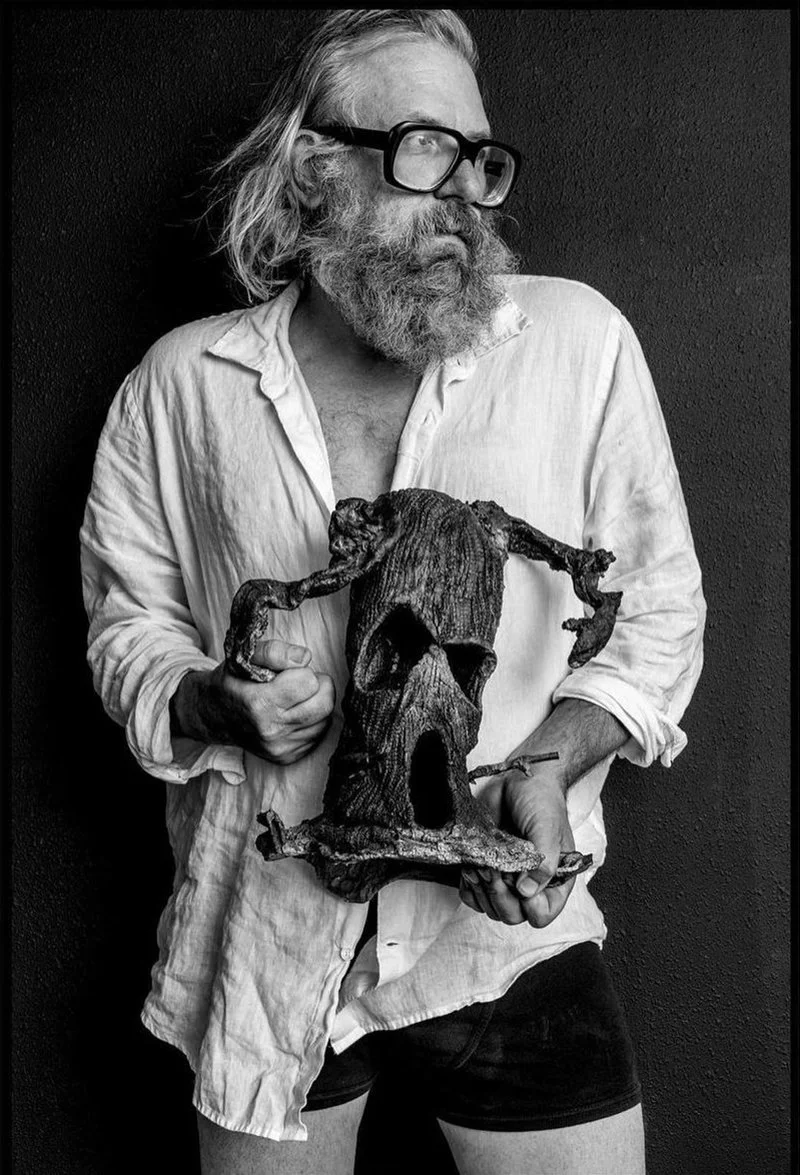
Saul Appelbaum

Founding Director, The Pioneers

Los Angeles–based artist, media director, writer, independent curator, producer, and digital strategist

Media partners

follow us

Developed by Parthivi

Privacy Policy

© 2025 ACW. All rights reserved.

Media partners

Designed by Simmering

Developed by Parthivi

© 2025 ACW. All rights reserved.